
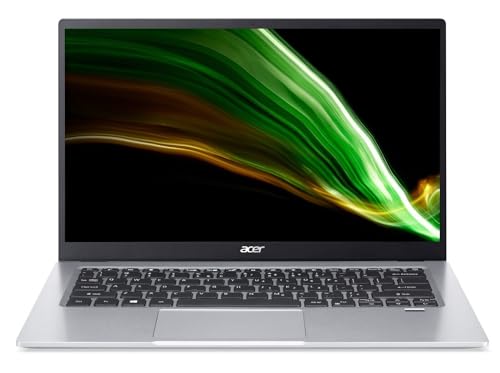
The Acer Aspire 1 is a straightforward 14-inch laptop whose specification is built around essentials rather than excess. An Intel Celeron or Pentium processor, 4GB of RAM and Intel HD Graphics establish a modest platform, while the combination of a 14-inch display and a claimed nine-hour battery life gives the machine a clear practical identity. It is designed for buyers who value a simple computer with familiar connections and a reasonable stated operating span away from a socket.
Practical foundations
The battery figure is one of the Aspire 1’s strongest headline specifications. Nine hours should support a substantial period of work or study between charges on paper, although the supplied figure does not identify the conditions behind that rating. That makes it a useful part of the product’s proposition without turning it into a guarantee of a particular real-world routine.
Connectivity is unusually well represented in this compact specification. The laptop includes one USB 3.0 port, two USB 2.0 ports, HDMI and Ethernet, giving buyers several direct ways to attach peripherals, displays or a wired network. The single USB 3.0 connection provides one faster USB option, while the two USB 2.0 ports add capacity for compatible accessories. Wireless networking is covered by 802.11ac, providing a defined modern connection standard.
The 14-inch display size occupies a sensible middle position within the laptop format. It should provide more working area than a very compact screen while retaining the basic portability expected from a laptop. However, the 1.65kg weight is a confirmed physical trade-off: the Aspire 1 is carryable, but its mass will matter to buyers who move their computer frequently.
Where the specification is restrained
Storage is the clearest limitation. The available capacity is either 32GB or 64GB, using eMMC technology. That leaves limited room for files stored locally and makes the exact configuration important to anyone intending to keep substantial documents or media on the machine. The 4GB RAM allocation is similarly restrained, leaving limited headroom for more demanding multitasking workloads.
Graphics are handled by Intel HD Graphics, rather than a separately specified graphics processor. Combined with the Celeron or Pentium processor options, this places the Aspire 1’s technical emphasis on basic computing rather than graphics-intensive tasks. The supplied specification supports that positioning, but does not establish performance in particular applications or games.