
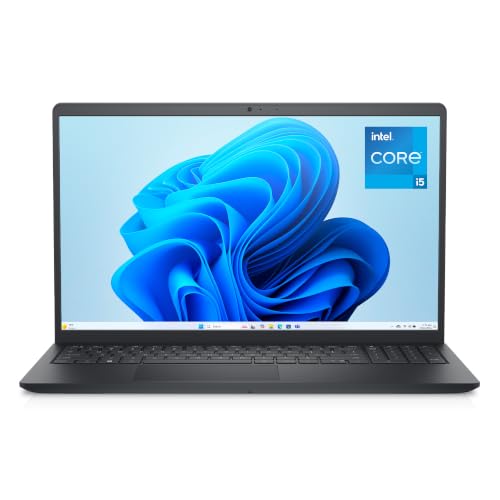
The Dell DC15250 is a straightforward mainstream Windows laptop whose strongest argument is balance. Its 13th Generation Intel Core i5-1334U processor sits alongside 16GB of RAM and a 512GB M.2 PCIe NVMe SSD, creating a credible specification base for general-purpose computing. Windows 11 Home completes a familiar, ready-to-use platform.
A practical screen and chassis
The 15.6-inch WVA IPS display has a 1920x1080 resolution and 120Hz refresh rate. That combination gives the panel a clear Full HD foundation and the technical basis for more fluid motion than a conventional 60Hz design. Its anti-glare treatment is also specified, making the screen’s design more suitable for varied everyday viewing environments, although no independent readability or colour assessment is supplied here.
The full-size format brings useful working space, while the 1.62kg weight keeps the machine within a reasonably portable category on paper. The trade-off is the plastic exterior shell. That is a functional construction choice rather than a premium material decision, and buyers prioritising a more upmarket chassis should understand where this model’s emphasis lies.
Connectivity that earns its place
Dell has given the DC15250 a useful spread of physical connections: USB 3.2 Gen 1 Type-A, USB 2.0, USB 3.2 Gen 1 Type-C, HDMI 1.4, a universal audio jack, an SD-card slot and a power jack. That selection should accommodate common desk peripherals, external display connection and removable storage without relying entirely on adapters. The SD-card slot is particularly practical for users moving files from compatible devices.
Wireless provision is similarly current in its stated specification, with Wi-Fi 6 using a 2x2 802.11ax configuration, MU-MIMO and Bluetooth. The USB Type-C port is explicitly data-only, however, so it should not be treated as a universal charging or display connection based on the supplied specification.
Sensible boundaries
Intel UHD Graphics is integrated graphics rather than a discrete graphics solution. That establishes the laptop’s intended territory clearly: the specification is oriented towards everyday Windows use and standard productivity, not demanding graphics workloads. The 41Wh battery is another defined compromise. It is a compact capacity for a 15.6-inch laptop, so buyers should view the machine as a practical plugged-in or routine-mobile computer rather than assume exceptional endurance.