
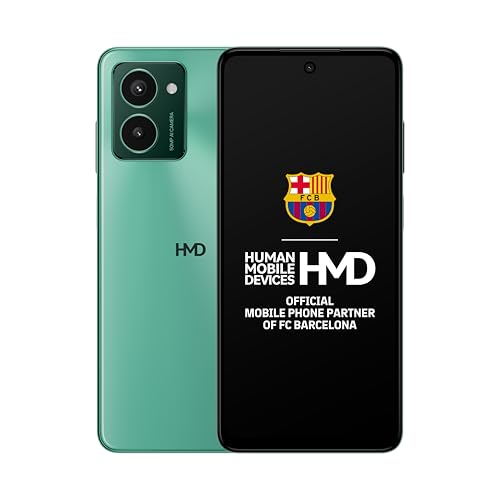
The HMD Pulse Pro presents a clear, practical proposition: a large Android phone with a sizeable battery, a high-resolution front camera and a specification aimed at everyday use. Its strongest numbers are the 5000mAh battery and the manufacturer’s claim of up to 59 hours of video playback, giving the handset substantial endurance credentials on paper. That figure is a stated playback estimate rather than an independent test result, but it remains the clearest indication of the phone’s intended strength.
A straightforward screen package
The 6.56-inch display uses a 90Hz refresh rate, which gives it the technical foundation for more fluid motion than a conventional 60Hz panel. Peak brightness is specified at 600 nits, providing a defined brightness ceiling, while the 1612×720 resolution is the principal screen compromise. Across this relatively large diagonal, that pixel specification is modest, so buyers prioritising display sharpness should understand the trade-off before choosing it.
The screen’s proportions and size should suit users who want a broad viewing area for Android applications and video playback. The 90Hz figure adds a useful specification for movement, although no independent claim about real-world smoothness can be made from the number alone.
Camera and everyday hardware
A 50MP front camera gives the Pulse Pro a conspicuous selfie focus. The resolution establishes a substantial capture specification for the front-facing camera, without proving image quality, processing performance or video results. That makes it a relevant feature for buyers who place front-camera resolution high on their priorities.
The phone runs Android 14 and combines 6GB of RAM with 128GB of storage. Together, those figures form a sensible everyday platform on paper, while the Unisoc T606 identifies the underlying chipset and its intended entry-level positioning. These specifications do not establish application speed, gaming performance or thermal behaviour, but they clearly place the Pulse Pro around practical general use rather than making unsupported performance promises.
The physical trade-offs
At 196g and 8.55mm thick, the handset has a substantial physical presence. The weight is a genuine consideration for prolonged one-handed handling, while the thickness gives buyers another concrete dimension to account for when assessing portability. Its IP52 rating provides a stated level of protection, but it should not be treated as a promise of unrestricted water resistance.