
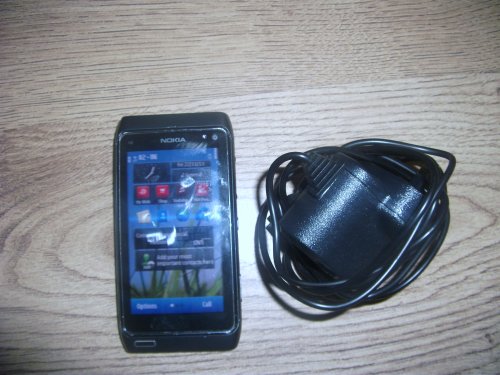
The Nokia N8 is an unusually characterful smartphone proposition: a 12MP camera-led device with an AMOLED display, anodised-aluminium construction and the long-established Symbian platform. Its specification is not built around brute-force hardware. Instead, it presents a defined combination of imaging ambition, compact proportions and a recognisable physical design.
Camera-first identity
The rear camera is the clearest statement of intent. A 12MP resolution is supported by a 1/1.83-inch sensor, giving the N8 a specification that places photography at the centre of its appeal. That does not establish real-world image quality by itself, but it does mark the phone out from a generic camera offering. The VGA front camera is a much simpler proposition, with a clear resolution gap between front and rear imaging hardware.
The display reinforces the phone’s compact format. Its 3.5-inch AMOLED panel runs at 360 x 640 pixels, supplying a display technology with a distinct technical identity rather than an anonymous screen specification. The resolution is firmly tied to the handset’s smaller dimensions, and the result is a phone designed around a more contained viewing area than today’s large-screen formats.
A distinctive physical package
Anodised aluminium gives the N8 a specific material character on paper, while its colour range is unusually broad: Dark Grey, Silver White, Green, Blue, Orange, Pink and Bronze are all listed alongside the main options. That variety makes the model feel deliberately designed as a personal object rather than a single-finish utility device.
At 135g and 12.9mm thick, it is not an especially slight physical package. Those figures are important trade-offs for buyers prioritising a compact footprint, because the phone combines modest overall dimensions with a relatively substantial depth. The listed 16GB storage, however, gives the device a useful baseline for personal files and installed software.
Modest foundations
The central hardware platform is an ARM 11 chipset running at up to 0.68GHz, paired with Broadcom’s BCM2727 GPU and 0.25GB of RAM. These figures describe a restrained hardware foundation, rather than a device positioned around high computational headroom. The operating system is Symbian^3, with an upgrade path to Nokia Belle Refresh, defining the software experience through Nokia’s own platform lineage.
The 1200mAh battery is another clear constraint in the specification. Capacity alone cannot establish endurance, but it does set a limited ceiling for the energy available to the handset. Buyers drawn to the N8 therefore need to value its camera, construction and compact AMOLED format more highly than raw hardware scale.